Government of Jamaica Flag of Jamaica

Portland Coffee Farmers Get Fertilisers, Herbicides

COFFEE FARMERS in the Buff Bay Valley area of Portland have received fertilisers and herbicides from the Jamaica Agricultural Commodities Regulatory Authority (JACRA) to assist in Hurricane Beryl recovery efforts.

Approximately 200 bags of herbicides and the first 150 of 220 bags of fertilisers were handed over on September 11 at the Church of God of Prophecy in Bangor Ridge.

Minister of Agriculture, Fisheries and Mining Floyd Green, who delivered the keynote address at the event, said coffee continues to be an important contributor to the country’s agricultural sector and the needs of the farmers must be addressed.

“We have to ensure that our coffee farmers feel regarded, feel respected; and they know that if there is any difficulty, this ministry will respond,” he noted.

He hailed JACRA for rolling out the Hurricane Beryl relief initiatives early, citing a previous handover of fertilisers to coffee farmers in St Andrew.

Noting that the coffee sector was significantly impacted by the Category 4 hurricane, Green said that stakeholders must ensure that the farmers are assisted in recovering “quickly and better”.

“We appreciate that one of the biggest challenges you have is just the cost of input as you look to rebound, and one of that big cost is fertiliser,” he pointed out.

Green urged those farmers who are not on the list to benefit from the inputs, to ensure that their names are registered, as “everybody will get some support”.

For his part, Wayne Hunter, acting director general of JACRA, expressed gratitude to the “hard-working farmers”, noting that they are integral to the Jamaican agricultural identity.

He noted that it is through their “resilience, dedication and unwavering spirit” that the 60 per cent damage to coffee farms and infrastructure following Beryl has been reduced to 25 per cent.

Hunter also acknowledged the “tireless work” of industry partners and the JACRA team islandwide for the ongoing support during difficult times.

Pointing out that the Buff Bay Valley is a high-producing area for coffee, Hunter gave the assurance that JACRA stands ready to see the farmers through to recovery and is looking to foster continuous growth in the region.

Jacra Distributes 160 Bags of Fertiliser to St Andrew Farmers

In response to the severe impact of Hurricane Beryl on the agriculture sector, the Jamaica Agricultural Commodities Regulatory Authority (JACRA) has initiated a comprehensive recovery assistance programme.

On Friday, August 16, JACRA distributed 160 bags of 50-pound fertiliser to farmers in various areas of St Andrew. This first round of aid reached 70 registered farmers, each receiving two bags of fertiliser, with additional distributions planned for the coming weeks.

“This is just the first phase of JACRA’s efforts to strengthen the industry’s recovery,” said Wayne Hunter, Acting Director General at JACRA.

“Hurricane Beryl has affected us all profoundly, and we are committed to providing meaningful and substantial support to our farmers and stakeholders.”

The hurricane’s powerful winds and heavy rains depleted the soil of essential nutrients. The fertiliser distributed will replenish these nutrients, promoting healthy plant growth and recovery.

“Our coffee farmers have demonstrated remarkable resilience in the face of adversity, and we are inspired by their perseverance. With their determination and our continued support, we are confident they can overcome these challenges,” Hunter noted.

JACRA will continue its efforts by distributing additional fertiliser and seedlings to farmers across the island in the upcoming weeks.

JACRA Distributes Over 200 Pimento Seedlings In St Thomas

Farmers in Bethel Gap, St Thomas, were treated to a much-needed boost last Tuesday following the distribution of more than 200 pimento seedlings by the Jamaica Agricultural Commodities Regulatory Authority (JACRA) as part of its efforts to revitalise the pimento industry.

Forty-three farmers received a total of 215 seedlings (five each) during the day’s activities, and another 85 seedlings are to be distributed to an additional 17 farmers in the coming weeks. This will bring the total number of seedlings to be distributed in the area to 300.

“Pimento, in recent times, has seen tremendous growth in the international market as well as the local market. So JACRA thought now was the best time for our farmers to tap into that market, with a boost in the commodity’s production,” said Wayne Hunter, acting director general.

“As such, the programme is of no cost to the farmers – it is coming out of JACRA’s commodity development budget. And we will continue to distribute as much seedlings as we can across the island. We only ask that the farmers dig the holes for planting,” Hunter added.

According to research conducted by JACRA, Jamaica’s pimento sector currently suffers from declining production due partly to aged trees, which have passed their peak production years and unsustainable harvesting practices threatening the longevity of the sector. This, in turn, has affected Jamaica’s ability to meet global demands for the spice, which currently stands at approximately 3,000 metric tons per annum while the island only produces about 190 metric tons per annum.

“The market is open, vibrant, and ready for us. But what we have seen is that we just need to increase production. There are companies like McCormick and Big Tree Spice in need of Jamaican pimento, but we just don’t have enough to give them,” Hunter told farmers during the distribution ceremony.

Through the Pimento Seedlings Distribution Project, JACRA aims to give farmers across the island 25 seedlings each, giving the sector room to grow and improve pimento production in the coming years.

“We would like to take this opportunity to encourage all of our farmers to look down the road for the return of pimento,” Hunter said.

JACRA Opens New State-of-the-art Warehouse

The Jamaica Agricultural Commodities Regulatory Authority (JACRA) last week officially opened the doors to its new multifaceted coffee warehouse located off Marcus Garvey Drive in Kingston.

The more than 1,000 square metre warehouse ground will be used to house coffee from producers across Jamaica for quality testing and eventual export to buyers across the world.

Boasting state-of-the-art features such as temperature and humidity control, the warehouse utilises product traceability technology to map shipment stages and an on-site laboratory for cupping and quality testing of export ready coffee — all of which are powered by the expertise of qualified staff members.

Speaking at the opening ceremony last Friday, June 14, acting director general at JACRA Wayne Hunter said the facility will help to further position Jamaica’s coffee among the world’s most premium brands.

“It is without doubt that Jamaica’s Blue Mountain and High Mountain Coffee are the best in the world — and now with a facility like the JACRA coffee warehouse, greater efforts can now be made to keep our coffee it its current prestigious position,” he said.

JACRA, in investing over $32 million in the redevelopment of the warehouse, said its hope is for the facility to stand as a gatekeeper in the market, ensuring that all the necessary checks and balances are done so as to ensure that only quality products make their way unto global shelves.

“We know that we have the best coffee in the world…we have a unique taste, we have unique flavour profiles and we have seen how coffee has significantly contributed to the Jamaican economy, earning us over US$25 million each year,” Minister of Agriculture Floyd Green said in his remarks.

Lauding the efforts of local coffee farmers in producing top rated products despite various challenges spread across labour shortages, low prices, poor road networks and climate change impacts, Green said it is their role that has continued to ensure that we maintain a robust coffee industry.

“There is no coffee export without our coffee farmers and we must remember that anything we do, the core of what we do is [often linked] to what is happening on the ground,” he noted.

JACRA, an agency of the Ministry of Agriculture, was established for the development, regulation, and standardisation of the agricultural commodities industry. In its current regulatory function, it oversees a number of commodities including coffee, cocoa, coconut and spices (nutmeg, pimento, ginger, and turmeric). Partnering with various stakeholders across industries, the entity works to promote and ensure the quality and integrity of the regulated commodities. Among its list of stakeholder partners in the coffee industry are the Jamaica Coffee Exporters Association (JCEA), the Jamaica Coffee Growers Association (JCGA).

President of the JCEA Norman Grant, in welcoming the new coffee warehouse as a much-needed addition, said it will help to set apart Jamaica’s coffee on the world stage, validating its potency based on the advanced levels of testing it will undergo before becoming certified.

“The opening of this warehouse signals another game-changing move in the coffee industry. I say so, because when we export Jamaica Blue Mountain coffee, which is certified here at JACRA, it enters the global marketplace and finds itself into bonded warehouses around the world, which means we are in line with global standards,” Grant said.

JACRA Distributes 160 Bags of Fertilizer to St. Andrew Farmers

In response to the severe impact of Hurricane Beryl on the agriculture sector, the Jamaica Agricultural Commodities Regulatory Authority (JACRA) has initiated a comprehensive recovery assistance program.

On Friday, August 16, JACRA distributed 160 bags of 50-pound fertilizer to farmers in various areas of St Andrew.

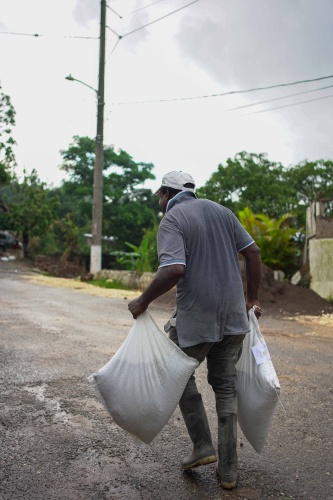
A farmer happily carries two bags of fertilizer back to his home following distribution by JACRA in the hills of St Andrew.

This first round of aid reached 70 registered farmers, each receiving two bags of fertilizer, with additional distributions planned for the coming weeks.

“This is just the first phase of JACRA’s efforts to strengthen the industry’s recovery,” said Mr. Wayne Hunter, Acting Director General at JACRA.

“Hurricane Beryl has affected us all profoundly, and we are committed to providing meaningful and substantial support to our farmers and stakeholders.”

The hurricane’s powerful winds and heavy rains depleted the soil of essential nutrients.

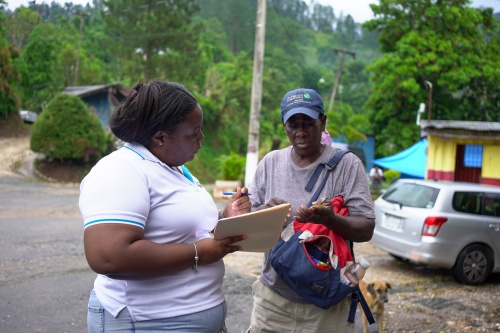
JACRA Customer Service Officer, Lori-Ann Jones, takes the details of a St Andrew coffee farmer slated to receive fertilizer. 

The fertilizer distributed will replenish these nutrients, promoting healthy plant growth and recovery.

“Our coffee farmers have demonstrated remarkable resilience in the face of adversity, and we are inspired by their perseverance. With their determination and our continued support, we are confident they can overcome these challenges,” Mr. Hunter added.

JACRA will continue its efforts by distributing additional fertilizer and seedlings to farmers across the island in the upcoming weeks.

Third-generation Farmer Returns To Carry On Family’s Dream

When Shirlet Mcghan considered returning to Jamaica from the United States following her retirement, the first thing she pondered was the kind of work she might still be able to do. After all, she had been a social worker for most of her working life, so shifting to another field – especially at her age – would not be the easiest task.

“I always had plans of returning to Jamaica after I retired. So, about a year or so before that time, I came home just to look around and see what I could do as I am still healthy and, of course, having some sort of additional income is always good,” Mcghan said.

“I got a few suggestions but continued looking around for a while. I didn’t want to do anything too labour intensive, and things have changed so much in the last couple of years; manual help for farming has got scarce and everyone is worried about praedial larceny,” she continued.

After some time, Mcghan says she was pointed in the direction of mixed agriculture – a suggestion which piqued her interest as both her father and grandfather were farmers. She recalled the days of her youth, following her father to his cocoa farms in the area.

“I didn’t know my grandfather because he died very young, but my father had these properties where it was cocoa, cocoa, cocoa all the time… . Growing up, that was the main thing to do – help reap the cocoa. In fact, that’s how we got our little pocket money by picking up what they call ‘rat cut’ and selling it,” Mcghan explained with a big smile.

This experience, as she recalls it, was over 50 years ago, but was a practice popular among the youth of the time and was representative of the Jamaican culture of yesteryear.

GROWING THE COCOA SECTOR

According to Wayne Hunter, acting director general at the Jamaica Agricultural Commodities Regulatory Authority (JACRA), these are the experiences that will continue to grow the cocoa sector for years to come.

“Commodities like cocoa hold a special place in the hearts and minds of Jamaicans across the world – everyone has had some experience with it in some shape or form. Either you grew up like Ms Shirtlet collecting and drying your rat cut for your little sale, or you watched the trees grow over the years after your family and community members planted it,” he explained.

“One of our goals at JACRA is to reignite these precious memories that are in the process of being forgotten. We want these memories to be passed on from generation to generation, so a new collective of farmers can come up saying, ‘Yes, I am going to plant cocoa ‘cause I saw my mother and father growing it’,” Hunter continued.

In her quest for assistance with bringing her cocoa dreams to life, Mcghan sought the aid of JACRA who function as the regulator and holder of developmental plans for the industry.

The entity provided the third-generation farmer with 84 grafted cocoa seedlings which she, along with some help from other farmers in the community, planted on a section of land she had next to her home.

“I got a lot of help from Mr Campbell (JACRA field advisory officer) on what to do with the land. He even brought in a team from JACRA to clean up the land and do everything that was necessary to prep it for the seedlings they were bringing,” Mcghan explained.

With these investments, the recently retired social worker has a fresh perspective on her future and is looking to expand to higher heights.

“I am hoping I can make it a little bigger than things are now. I really want to sell the dried cocoa beans, but I want to try them myself and find what is best before I go deeper. And who knows, maybe when I get to a certain level, I can train other farmers and buy their beans from them for selling,” Mcghan said.

“Although, that would be just like when I was a young girl. Life certainly does come full circle sometimes,” she added with a laugh.

JACRA to Craft Programme of Support for Women Coffee Farmers

Jamaican women in coffee farming are being hailed for their resilience, with the Jamaica Agricultural Commodities Regulatory Authority (JACRA) signalling its intention to craft a programme of support.

Speaking recently at the handover of fertilisers and herbicides to coffee farmers in the Buff Bay Valley area of Portland following Hurricane Beryl, Acting Director General of JACRA, Wayne Hunter, said that “the women in coffee have shown strong resilience”.

“I have advised the advisory unit to come back and let us craft a programme specifically designed for the women in coffee. Based on what we have seen, the women in coffee deserve to be celebrated,” Mr. Hunter added.

Overall, the Acting Director General said that coffee farmers are integral to the Jamaican agricultural identity, while hailing them for their “resilience, dedication and unwavering spirit”, which has significantly aided Hurricane Beryl relief efforts.

JACRA Pledges Support To Increase Productivity Among Farmers

Acting Director General of the Jamaica Agricultural Commodities Regulatory Authority, Wayne Hunter, has committed the organisation’s expertise to drive production.

Mr. Hunter bemoaned the low level of productivity plaguing the farming sector.

He pointed out that enough is not being produced to supply the local demand for produce.

The JACRA head says the agency will be investing in the agriculture sector to drive production.  

“JACRA has been mandated through that of its board to meet the farmers once you have the available lands to plant these commodity crops. JACRA will be with you side by side, not only with the plants to put in the ground, but JACRA would ensure that you have the necessary inputs – and the inputs being fertiliser or chemicals to ensure that the field is build out. All that we are trying to ensure is that food security is not treated lightly, but food security will be at the forefront of our minds,” Mr. Hunter announced. 

He was speaking at the launch of 7 Eleven Coffee Project at the Hayfield Primary School in St. Thomas.

JACRA regulates crops such as coffee, cocoa, coconut, spices, as well as oil producing beans and seeds. 

JACRA Readies V&T Block Chain-enabled Platform

The Jamaica Agricultural Commodities Regulatory Authority (JACRA), backed by the use of technology, is pushing to transform the local agriculture sector as it ushers in a block chain-run Verified & True (V&T) platform in 2025.

The platform, set for public launch and use sometime early next year, is now being developed with hopes for it to offer a digital infrastructure that will enable end-to-end traceability for some of Jamaica’s most prized agricultural commodities including coffee, cocoa, coconut and spices (pimento, nutmeg, ginger, and turmeric).

Among JACRA’s chief regulatory functions are the setting of quality standards and the provision of quality assurance along with its certification services which are generally focused on the governing of trade in the coffee, cocoa, coconut and spices industries.

In leveraging the use of technology, the regulatory body is looking to foster growth and efficiency in the agricultural commodities sectors while promoting transparency and ensuring quality in its regulated industries.

The initiative being done in collaboration with the Ministry of Agriculture, the regulatory agency said, marks significant progress in safeguarding the integrity and authenticity of Jamaican brands on the world stage. Through the V&T platform, Jamaica, it said, is positioning itself as a leader in the fight against counterfeit goods, while enhancing the transparency and sustainability of its agricultural supply chains.

“Jamaica’s agricultural commodities are hailed as some of the finest in the world. So much so that we have and continue to enjoy great economic gains and global recognition thanks to these celebrated commodities. It is with this in mind that we have embarked on this journey. With a platform like V&T, we are strengthening the foundations of love, trust and respect consumers across the world that have built with Brand Jamaica,” acting director general at JACRA Wayne Hunter said.

Minister of Agriculture and Fisheries Floyd Green, in regarding the technology as more than an upgrade, said it represents a transformation for the food sector, one he believes will help to protect local brands as it put farmers first while creating more equitable supply chains rooted in Jamaican origins.

Following the roll-out of the platform in the New Year, users from across the world will be able to scan QR codes placed on products made from local agricultural commodities, allowing them in the process to review and interact with the different farmers, farm history, proof of product origin among several other activities.

“This initiative will ensure that every time a consumer purchases a Jamaican product, no matter where in the world they are, they can trust its authenticity and its commitment to sustainable practices. We are excited to be leading this charge and look forward to the support of all stakeholders,” Green said.

“We are committed to creating a transparent system that gives consumers confidence in our products and, most importantly, puts our farmers at the heart of the value chain and we also expect the support of our international brand owners in this transformational process,” he added.

JACRA which has been actively working with Agrodise Limited to deliver the technology said it invites all stakeholders, both locally and internationally, to participate in the transformative journey. Over the next few months, the entity will be conducting a series of meetings to provide further details on the platform’s cost, functionality as well as how the benefits for participants such as farmers, consumers, exporters and brand owners will be integrated in the new system.

“We are proud to partner with JACRA in this ground-breaking initiative. Our goal is to help Jamaica’s agricultural sector thrive by providing the tools necessary to protect its products, its farmers, and its future. This is about more than technology; it’s about creating a brighter, more sustainable future for everyone involved,” Agrodise’s Christopher Reckord said.

From the Blue Mountains, with love

It was all smiles from the staff and students of Hayfield Primary School as they made their way from St Thomas to Kingston on a visit to the offices of the Jamaica Agricultural Commodities Regulatory Authority (JACRA) on Thursday.

The school, which boasts a total student complement of 17, received a new lease on education following the donation of a brand-new printer and $100,000 from JACRA last November.

“As a small multi-grade school, we face a lot of shortages when it comes to teaching and learning material – we need a lot more. Multi-grade settings mean that there are multiple grades within one classroom, so it can be difficult to split up the material for each student,” said Ucella Ramocan-Stephens, Hayfield’s principal.

Stephens went on to explain that the contributions not only enable the school to purchase more of these learning materials but also help the educators in getting the small student cohort excited for learning. And, for that, she is grateful.

“Getting these gifts is really a blessing for us, especially with the printer. We’ve been having challenges with our previous printer, which slowed us down when it came to printing activities, exams, administrative tasks, and so many other things,” the principal continued.

From JACRA’s perspective, the efforts aim to rejuvenate farming communities and plant the seeds for a new generation of farmers. Acting Director General Wayne Hunter notes that it is also a small step toward addressing farmers’ needs.

“JACRA’s mandate is not only to regulate Jamaica’s agricultural commodities,” said Hunter. “Our farmers and farming communities like Hayfield have a wide range of unique and equally important needs. And so, wherever we can, we will meet those needs.”

In addition to St Thomas, the Blue Mountain region also covers the parishes of Portland and St Andrew. Because these areas tend to be difficult to traverse, some residents say they feel forgotten when compared with their low-lying counterparts.

“It feels good to be seen! Sometimes, we are so far up and the roads are so bad that people don’t really want to come this side of Jamaica. So, whatever support comes our way, we are grateful because these donations can be life-changing,” said Ramocan-Stephens.